Gaze Lab: Eye Tracking in XR
XR
Unity
Eye Tracking
In development: a hands-on Unity lab I’m building for eye-tracked headsets like the Meta Quest Pro, covering gaze interaction, foveated rendering, fixations, heatmaps and scanpaths.
In development. Gaze Lab is a work in progress and hasn’t been released yet. The screenshots below are from current builds.
Eye tracking is moving into mainstream headsets, and it changes how we design for XR: what users can select with a glance, what needs to be rendered sharply, and what their gaze reveals. Gaze Lab is a Unity project I’m building for my XR course (CSCI 379, Fall 2026) so students can experience eye tracking from the inside, on the Meta Quest Pro through OpenXR.
It’s planned as a set of stations students walk between in VR:
- Head vs. eye pointing: a timed target task comparing selection by head direction and by gaze
- Foveated rendering: see how a headset renders sharply only where you’re looking, and what that saves
- Attention-aware interaction: eyes in a mirror that follow your gaze, and a statue that moves only when you aren’t watching it
- What is a fixation? Adjustable velocity thresholds, windows and durations show how raw gaze samples become fixations and saccades
- Gaze heatmaps and scanpaths: look at a painting, then replay where your eyes actually went
- Field of view: compare the visible field across more than a dozen current headsets
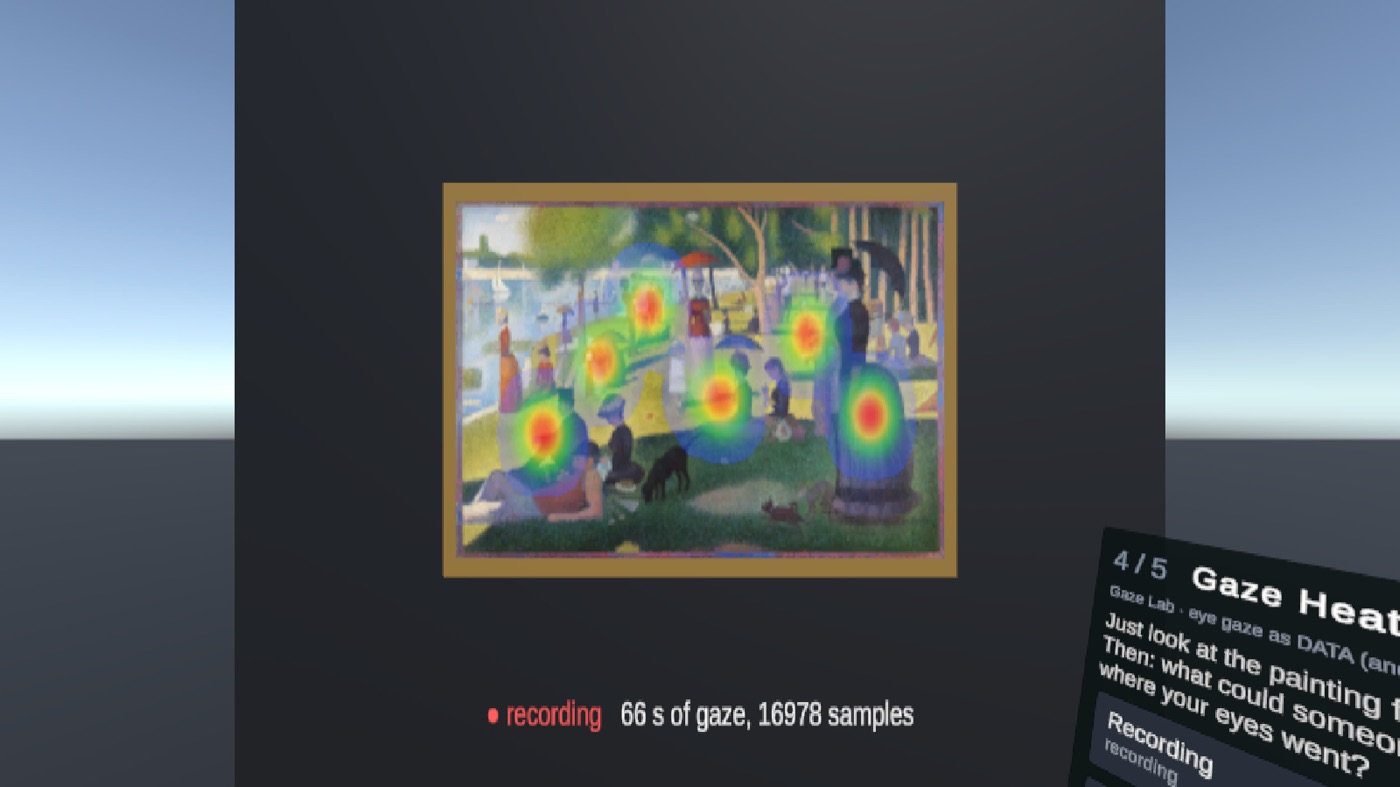
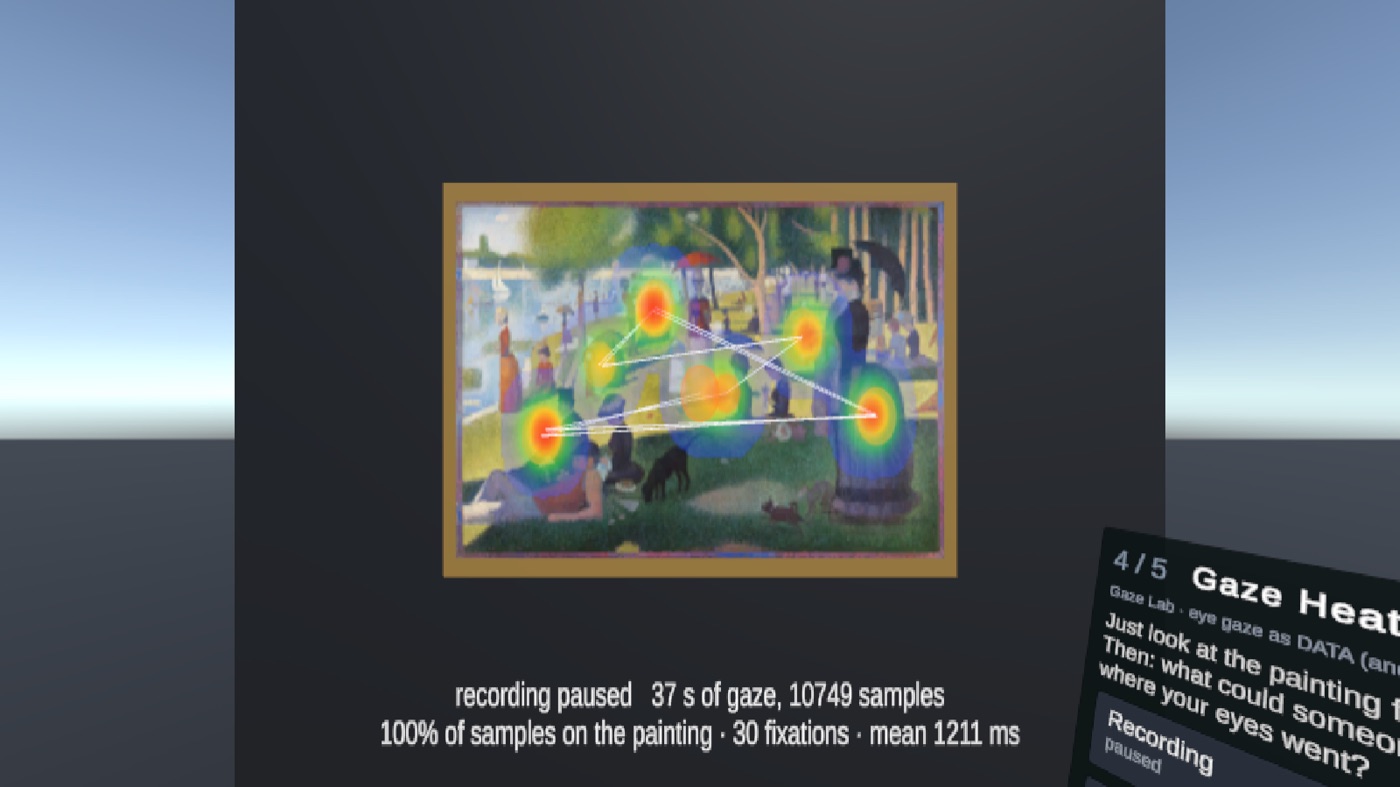
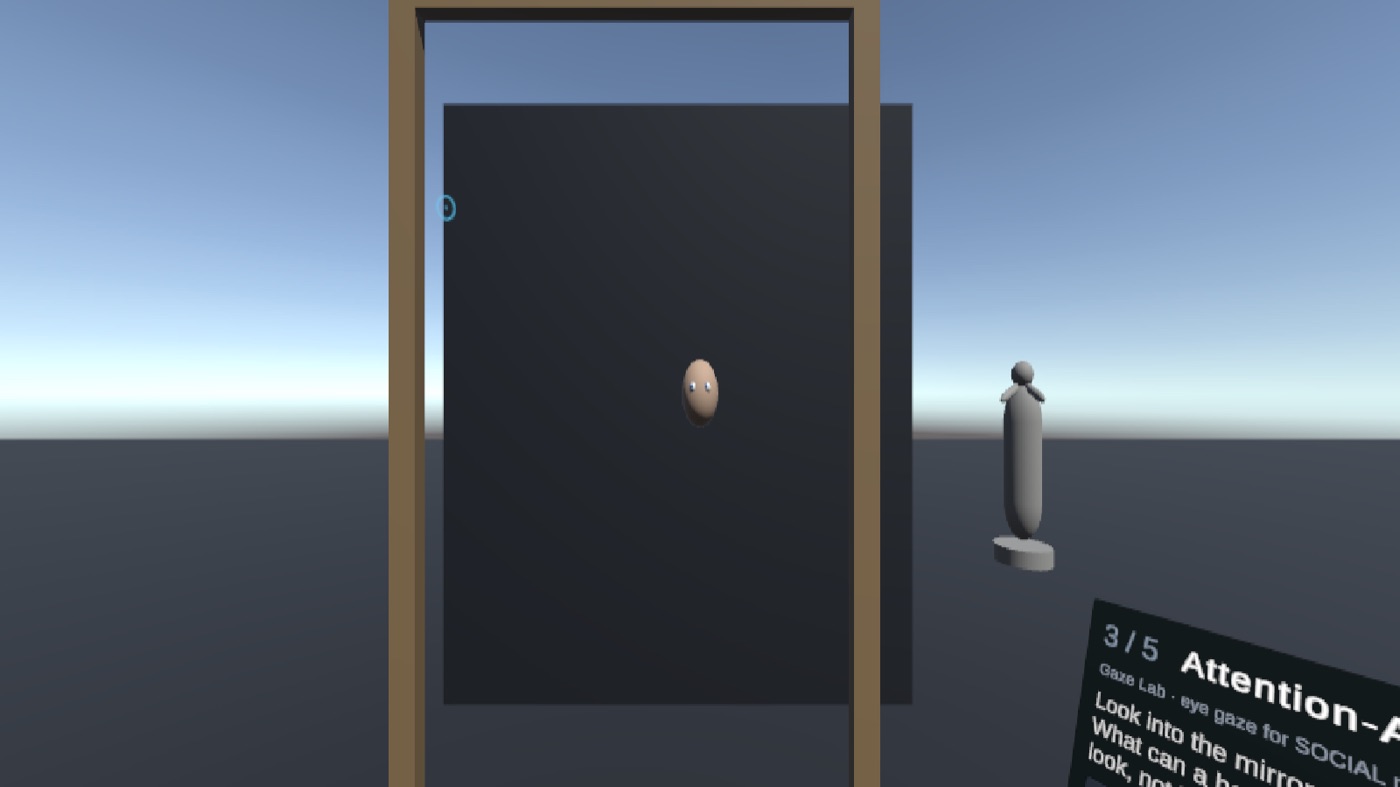
This builds on my earlier eye-tracking analytics research, which analyzed where groups of people look and what their gaze patterns reveal, now brought into the headset itself.
Back to top