Understanding AI: A Talk for Curious Minds

Bucknell Institute for Lifelong Learning (BILL) Tea & Talk · Bucknell University · Tuesday, November 17, 2026. The audience was BILL members, mostly retired adult learners, plus community guests. Event listing: BILL special presentations.
The talk had four parts: a short history of AI, a basic overview of AI today, the role data centers play in making AI possible and the challenges they bring to Pennsylvania and our surrounding communities, and ideas for what we can do about it.
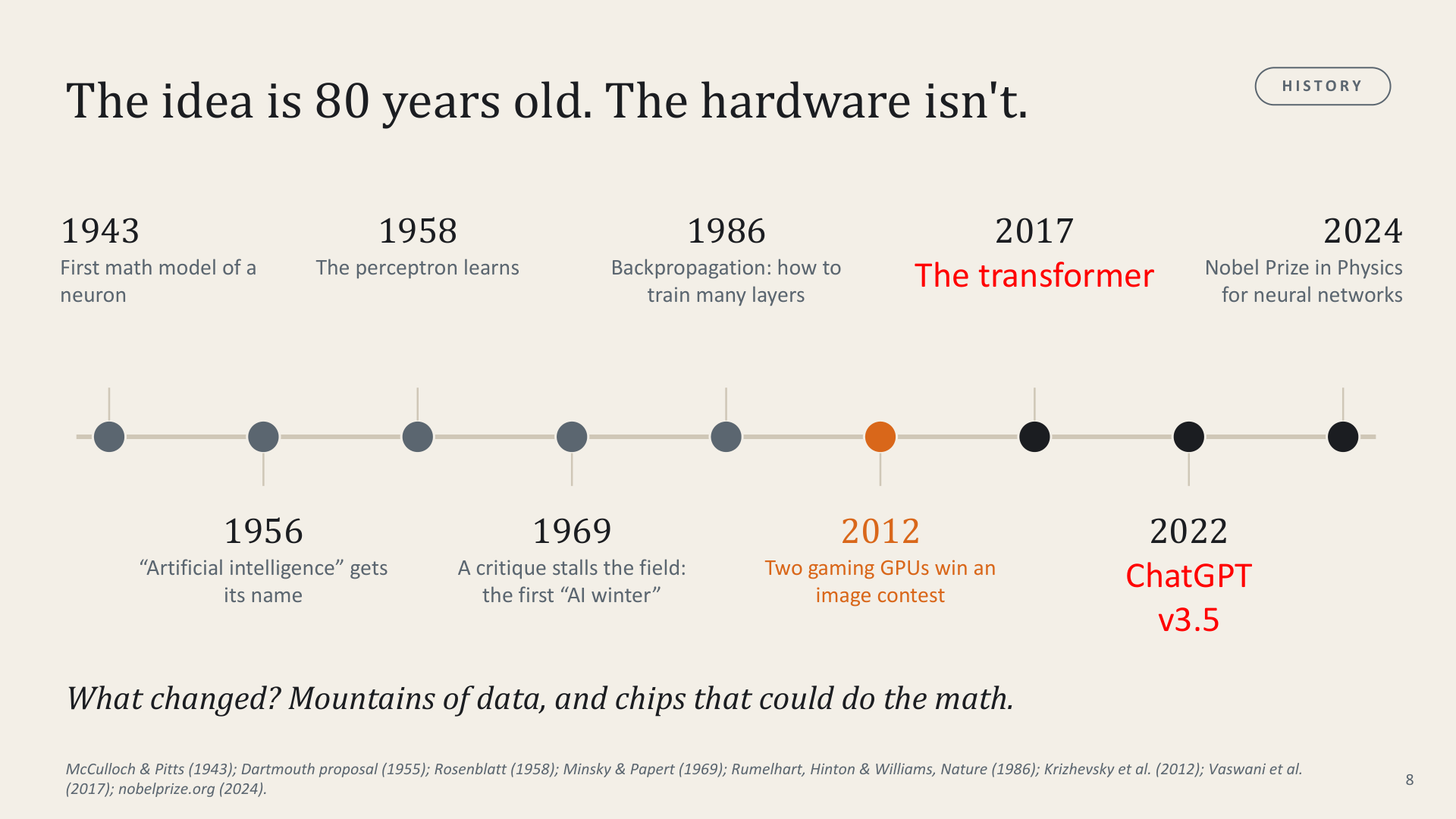
- History. The core idea behind today’s chatbots, an artificial neuron that learns by adjusting its weights, dates to the 1940s and 1950s. What changed was mountains of data and chips that could finally do the math.
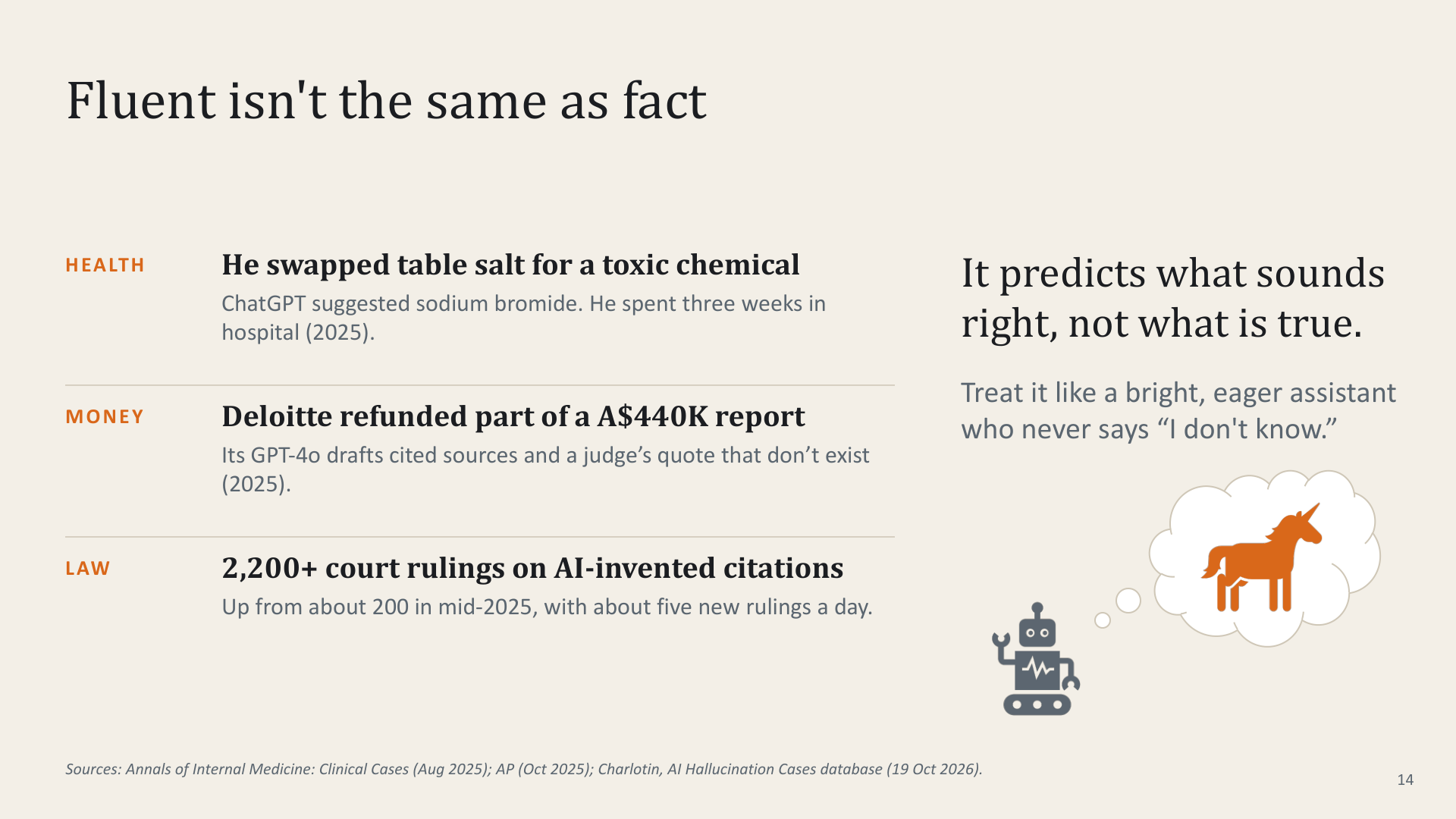
- AI today. A chatbot predicts the next word, which is why it sounds so fluent and why it can be confidently wrong. AI is also doing quieter, useful work, from protein structures and weather forecasts to air-quality monitoring in the Coal Region, where our team has sensors in Shamokin, Mount Carmel and Kulpmont.
- Data centers. All of that computing runs in data centers, which need large amounts of electricity and water. Many are being proposed across Pennsylvania, including one about ten miles from Bucknell.
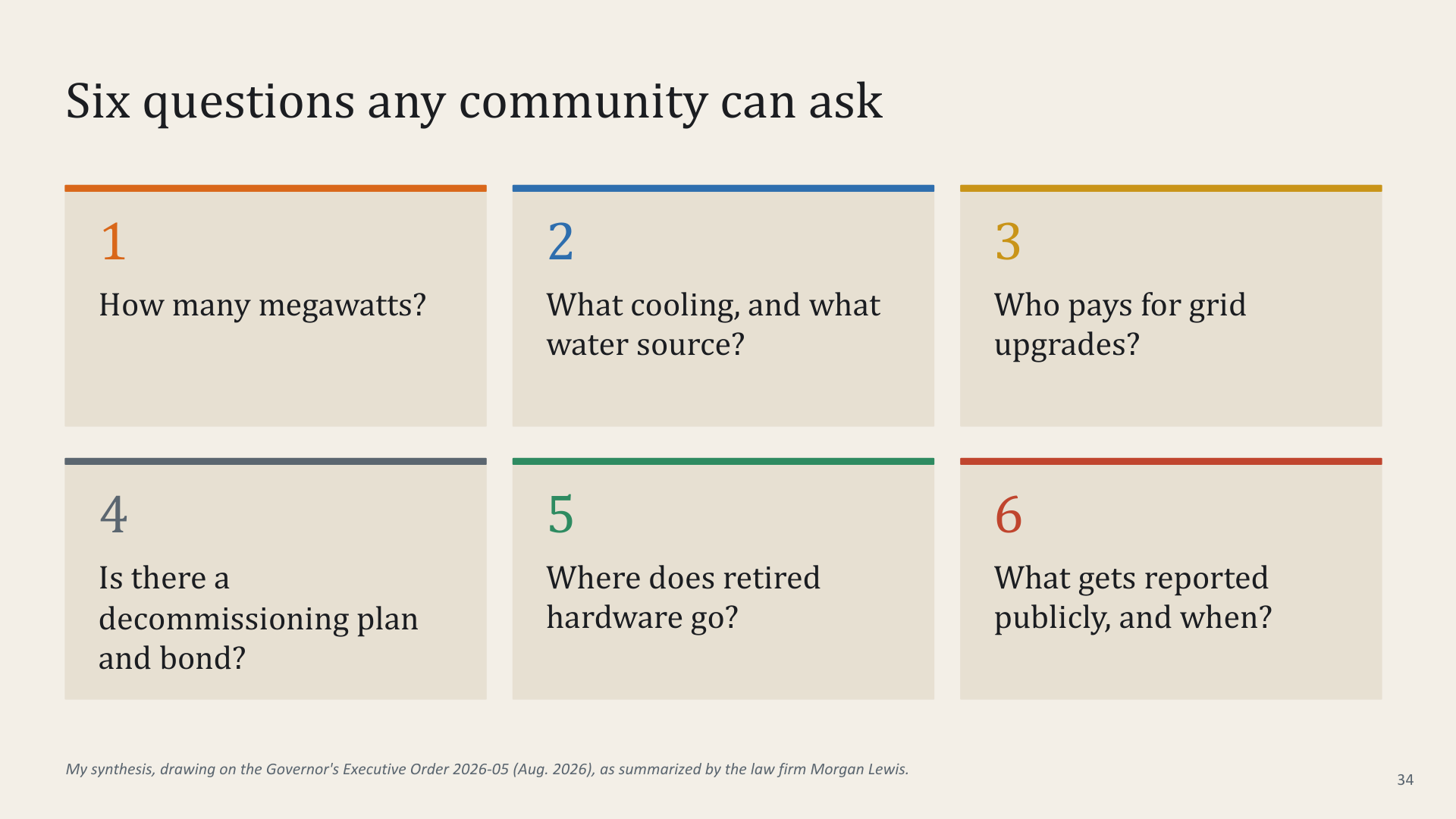
- What we can do. The talk ended with six questions any community can ask before a data center gets built.
Thank you to everyone who came out, and for the great questions.
Key takeaways
1. The idea is 80 years old. The hardware isn’t.
Sources: Dartmouth proposal (1955) · Rumelhart, Hinton & Williams, Nature (1986) · Krizhevsky, Sutskever & Hinton (2012) · Vaswani et al. (2017) · Nobel Prize in Physics 2024
2. Fluent isn’t the same as fact.
Sources: Annals of Internal Medicine: Clinical Cases (Aug. 2025) · AP, “Deloitte to partially refund Australian government for report with apparent AI-generated errors” (Oct. 7, 2025) · Charlotin AI Hallucination Cases database, via HAQQ (Oct. 2026)
3. Six questions any community can ask.
Sources: Governor’s Executive Order 2026-05, summarized by Morgan Lewis (Aug. 2026) · Bucknell News (Sept. 8, 2026)
4. The technology is neutral. The deal is everything.
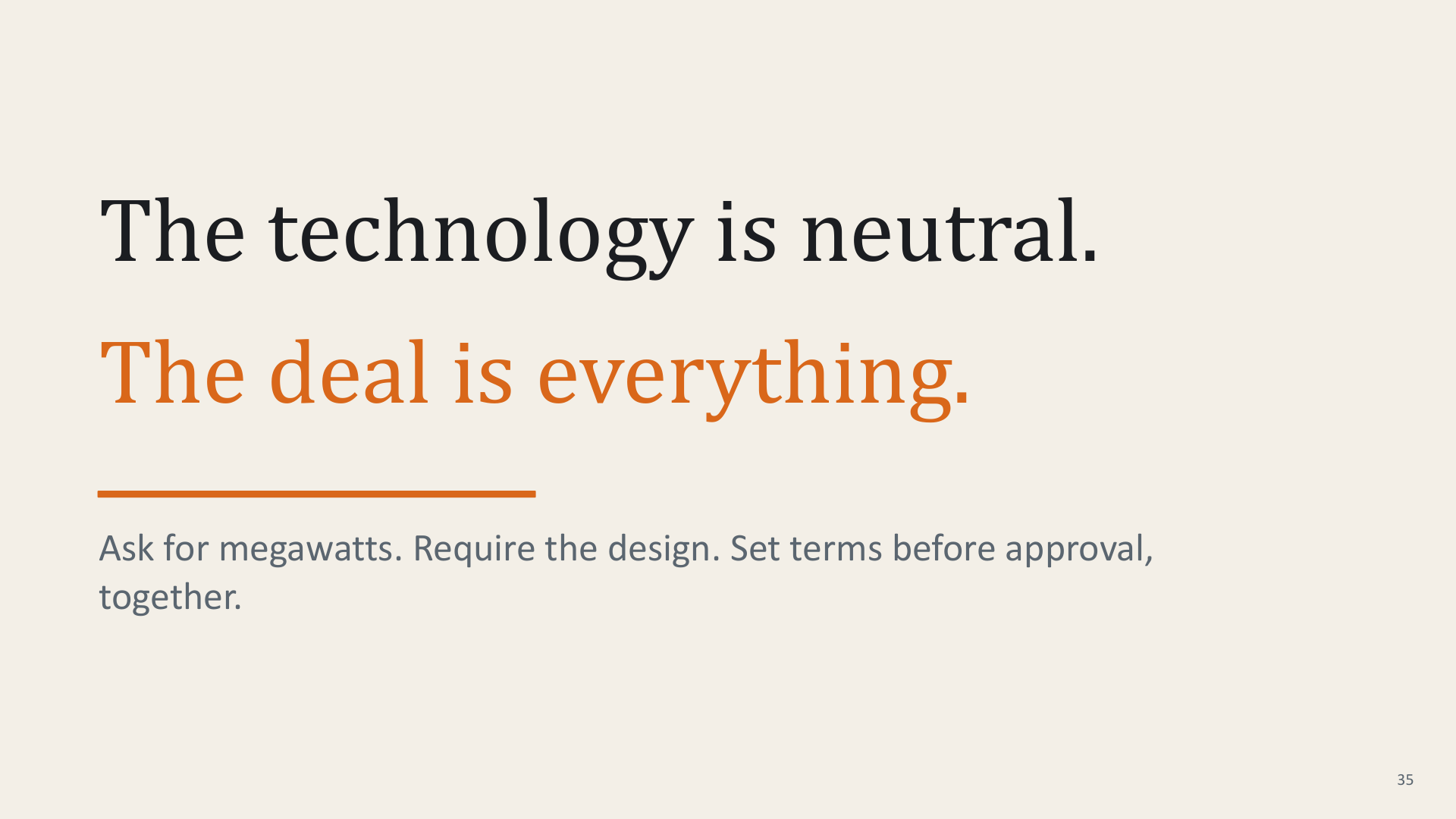
By “the deal” I mean the terms a community sets with a data center developer before a project is approved: where it can go, how much power and water it can use, who pays for grid upgrades, what gets reported to the public, and what happens when it closes. The same technology can be a good neighbor or a heavy burden, depending on those terms.
In Pennsylvania, much of that power sits with local government. Decisions about how data centers are built, and whether they fit a community, fall to township supervisors and borough councils. Zoning is their main tool, and Penn State’s Center for Energy Law and Policy notes that municipalities without a zoning ordinance “will not have nearly as much control” over data center development. Many rural townships have no zoning at all: in Snyder County, only six of 21 municipalities have zoning, and Tioga County has no countywide zoning, so development can go anywhere in a municipality without its own ordinance. Even a township with zoning can be caught off guard. In Lycoming County, Muncy Township’s ordinance was written long before hyperscale data centers existed, and when a developer applied to build three data center buildings on 100 acres of cornfields along the West Branch, the dispute went to county court, with the developer claiming automatic approval because the township missed a 60-day deadline.
That is why township boards matter so much right now. Each board should make sure its zoning ordinances address data centers directly, along with everything that comes with them: water use and water sources, land access, oil and mineral rights, power and grid upgrades, noise, and decommissioning. Each township board is responsible for negotiating a deal that protects its residents, not the data center companies.
Three Pennsylvania examples show how much the terms matter:
- Tioga County wrote its rules after a developer came looking and before any deal was signed. A landman approached the county commissioners about sites in 2025, and they steered him away from active farmland. In December 2025 the commissioners approved a data center ordinance covering lighting, noise, closed-loop water use, electricity and buffering. In August 2026, Alpha Compute announced a conditional $55 million deal for land and mineral rights there for a 200 MW gas-powered AI campus, and 2,912 people have signed a petition against data center development in the county.
- Lancaster set binding terms in a community benefits agreement: $20 million to two community funds, water capped at 20,000 gallons a day per campus with closed-loop cooling, and a public report to City Council every April.
- Swatara Township commissioners approved a $120 million agreement 4–1 after residents asked for time to read it first. As reported, its terms are payments to township funds and facilities; I found nothing in them on water, energy or noise.
Money is not the same thing as a good deal. So the talk closed with three asks: get the megawatts, require the design, and set the terms before approval, together, with residents in the room.